Blind Offer Real Estate: How to Buy Sight Unseen Safely
Unlock the potential of a blind offer real estate. Learn how to buy safely and avoid costly mistakes with essential contingencies and local help.
Blind Offer Real Estate: How to Buy Sight Unseen Safely

A blind offer is an offer to purchase a property you have never physically visited. Always include an inspection or due-diligence contingency — skipping it is the single most common and costly mistake sight-unseen buyers make.

Industry professionals are clear on this: a sight-unseen purchase is not an excuse to skip due diligence. It is a reordering of steps. You contract first, inspect second. That sequence is manageable with the right protections in place.
Before you send anything, do these three things:
- Get mortgage preapproval or confirm cash availability so your offer is credible from the start.
- Include an inspection or due-diligence contingency with a defined window suitable for the property’s complexity.
- Line up a local partner — an agent, inspector, or trusted contractor — to be your eyes on the ground.
TL;DR: A blind offer works when you protect yourself contractually and hire local help. Without those two things, you are gambling, not investing.
Table of Contents
- What exactly is a blind offer, and which type applies to you?
- When does a blind offer actually make sense?
- What you must check before sending a sight-unseen offer
- How to structure a blind offer that protects you without losing the deal
- Risks and red flags that should give you pause
- How investors and wholesalers use blind offers strategically
- Practical numbers: timelines, earnest money, and cost reserves
- Tools, paperwork, and templates that make blind offers work
- What happens after your blind offer is accepted
- Key Takeaways
- The part most guides get wrong about buying sight unseen
- Sendmls makes blind-offer submissions faster and harder to ignore
- Useful sources
What exactly is a blind offer, and which type applies to you?
In U.S. residential real estate, a blind offer (also called a sight-unseen offer) means the buyer submits a purchase contract without ever visiting the property in person. The term “blind” refers to the buyer’s lack of firsthand physical observation, not to any concealment of price or terms.
Several distinct variants exist, and which one you are dealing with changes what protections you need.
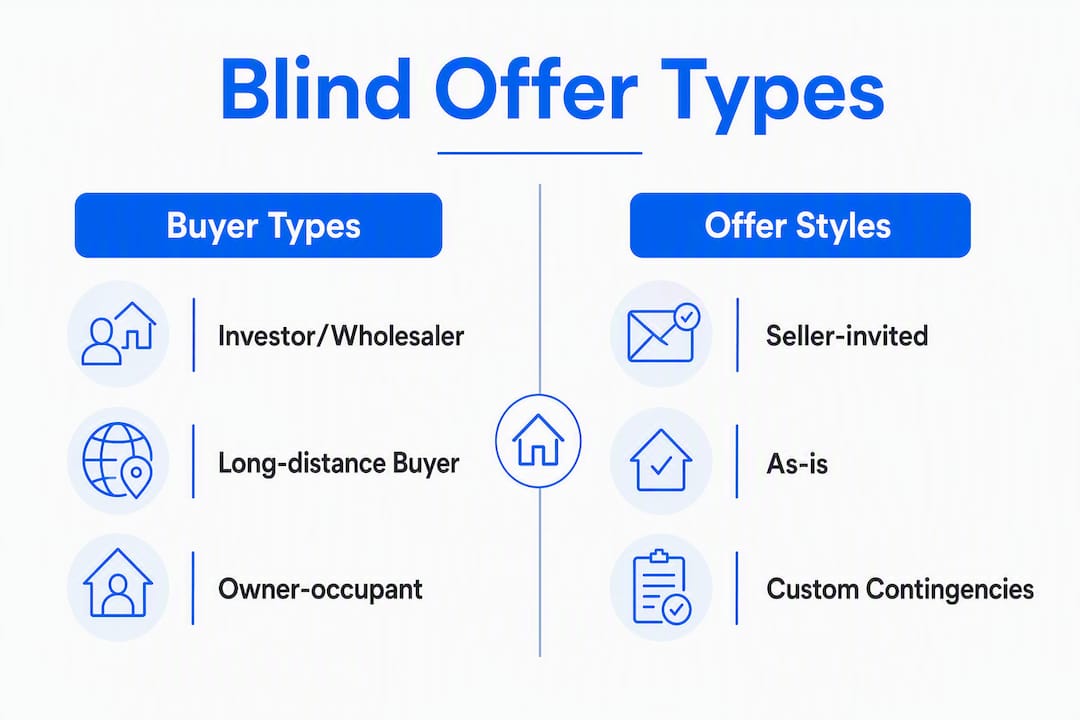
Investor or wholesaler blind offer. A fix-and-flip buyer or wholesaler submits an offer based on comparable sales, estimated repair costs, and an after-repair value (ARV) calculation. Speed is the priority. The buyer typically plans a post-acceptance inspection and prices in a repair reserve. Example: a wholesaler targets a 1970s ranch in a hot ZIP code, runs comps, and submits an offer the same day the listing goes live.
Long-distance relocation buyer. An owner-occupant is moving from another state and cannot visit before the listing goes under contract. They rely on a trusted local agent, a live video walkthrough, and a full inspection contingency. Example: a family relocating from New York to Austin contracts on a house they have only seen via FaceTime, then flies in during the inspection period.
Seller-invited blind offer. Some sellers in competitive markets explicitly invite offers before showings begin, creating a blind-bidding situation. Buyers submit without touring, and the seller reviews all offers at once. This is common in low-inventory markets where demand outpaces supply.
“As-is” blind offer. The seller lists the property as-is and may resist contingencies. Buyers who accept these terms take on the most risk. A pre-offer inspection — where a buyer hires an inspector before submitting — can substitute for a contingency, but it removes the ability to renegotiate after the fact.
When does a blind offer actually make sense?
The short answer: when the cost of waiting exceeds the risk of buying without a visit.
Low-inventory markets are the primary driver. When a desirable property receives multiple offers within 24–48 hours, a buyer who needs to fly in for a showing is effectively out of the running. Virtual tours became widespread during the COVID-19 pandemic and remain a standard tool for remote buyers, making sight-unseen purchases far more feasible than they were a decade ago.
Buyers typically turn to blind offers when:
- They are relocating for work and cannot visit before the listing expires.
- They are investors targeting specific price points or neighborhoods and need volume and speed.
- The market moves faster than travel logistics allow.
- They have strong local representation and trust their agent’s judgment.
Sellers accept blind offers for different reasons. A motivated seller who needs a fast close may prefer a sight-unseen buyer who is preapproved and ready to move. Some sellers, though, view sight-unseen buyers as higher risk because post-inspection fallout is more likely — especially with investors who discover unexpected repair costs.
3D listing tools like Matterport and high-quality video walkthroughs have shifted this calculus. A buyer who has done a live walkthrough via FaceTime with a local agent is not as “blind” as the term implies. The risk is real but manageable.
What you must check before sending a sight-unseen offer
Submitting without preparation is where buyers get hurt. This checklist covers the minimum due diligence before your offer goes out.
Financing and pricing:
- Confirm mortgage preapproval or proof of funds. A sight-unseen offer without financing certainty is easy for a listing agent to dismiss.
- Pull comparable sales (comps) for the past 90 days within a half-mile radius. Price your offer based on data, not emotion or listing price.
- Request the seller’s disclosure statement before submitting. In most states, sellers are legally required to disclose known material defects.
Virtual walkthrough:
- Schedule a live video walkthrough with your local agent or a hired inspector. Static photos miss odors, sounds, slopes, and scale. A live call lets you ask real-time questions: Is that floor laminate or hardwood? How large is the utility room? What does the crawlspace access look like?
- Ask your local contact to check the neighborhood at different times of day if possible — traffic, noise, and proximity to commercial properties matter.
Document and permit checks:
- Verify that all additions and renovations have permits on file with the county. Unpermitted work can block financing and create liability at resale.
- Review HOA documents if applicable: CC&Rs, meeting minutes, and reserve fund statements. An underfunded HOA reserve is a financial risk that does not show up in photos.
- Check FEMA flood maps for the property’s flood zone designation. Flood insurance in high-risk zones can add thousands of dollars annually to carrying costs.
Pro Tip: Ask your local agent to record the walkthrough and send you the video. You want a timestamped record of the property’s condition before you submit — useful if a disclosure dispute arises later.
How to structure a blind offer that protects you without losing the deal
Competitiveness and protection are not mutually exclusive. The key is knowing which contingencies are non-negotiable and which levers you can adjust to strengthen your position.
Core contract elements
Every sight-unseen offer should include these protections:
- Inspection contingency: Gives you the right to inspect and renegotiate or exit based on findings. This is the single most important protection in a blind offer.
- Financing contingency: Protects your earnest money if your loan falls through. Do not waive this unless you are a cash buyer.
- Appraisal contingency: Protects you if the property appraises below the purchase price. In competitive markets, buyers sometimes waive this — a significant risk when buying sight unseen.
- Clear earnest money terms: Specify the deposit amount, the timeline for delivery, and the exact conditions under which it is refundable.
Inspection windows and timing
Due diligence periods for sight-unseen offers typically range from two to four weeks when explicitly included in the contract; longer periods are advisable for complex or older properties and investor needs.
| Contingency Type | Recommended Window | Notes |
|---|---|---|
| Inspection / due diligence | 2–4 weeks | Longer windows reduce rushed decisions |
| Financing | 21–30 days | Matches typical lender timelines |
| Appraisal | 21 days | Coordinate with lender’s appraisal order date |
| Title review | 10 days | Shorter; title issues surface quickly |
Price strategy and escalation clauses
Owner-occupants buying sight unseen in competitive markets often offer at or slightly above list price, then rely on the inspection contingency to renegotiate if problems surface. Investors work differently: they calculate a maximum allowable offer (MAO) based on ARV minus repair costs and desired profit margin, then hold that number regardless of competition.
Escalation clauses — where your offer automatically increases up to a cap if a competing offer comes in — can help in blind-bidding situations. The risk: you may escalate to your cap on a property you have never seen, leaving less room to absorb repair costs discovered during inspection. Use escalation clauses cautiously when buying sight unseen.
Pre-offer inspections are another option in some competitive markets. You hire an inspector before submitting, accept the results as final, and submit a clean offer with no inspection contingency. This locks in speed but eliminates your ability to renegotiate — a tradeoff that works for experienced buyers with renovation knowledge, not for first-time buyers.
Risks and red flags that should give you pause
Buying sight unseen concentrates risk. Most of it is manageable; some of it is not.
Physical risks:
- Foundation issues: cracks, settling, and drainage problems are expensive and sometimes unfixable at a reasonable cost.
- Roof condition: a failing roof on a large home can cost $15,000–$30,000 to replace. Photos rarely show granule loss or flashing failures.
- Hidden water damage: moisture intrusion behind walls or under floors often goes undetected until mold becomes a health and remediation issue.
- Pest and fungal problems: termite damage and wood rot are common in older homes and in humid climates.
Legal and title risks:
- Unpermitted additions: a finished basement or added bedroom without permits can trigger lender refusal or require costly remediation at resale.
- Boundary disputes: survey discrepancies that are invisible in photos can affect usable lot area and future development.
- HOA restrictions: some HOAs prohibit short-term rentals, limit exterior modifications, or carry pending special assessments that are not disclosed upfront.
Financial risks:
- Appraisal gaps: if the property appraises below your offer price and you waived the appraisal contingency, you cover the difference in cash.
- Flood insurance costs: properties in FEMA Special Flood Hazard Areas (SFHAs) can carry annual flood insurance premiums that materially change the investment math.
- Underestimated repair reserves: buyers who have not seen a property in person consistently underestimate repair costs. Budget conservatively.
Red flags in listings or seller behavior:
- “No disclosures” or “sold as-is, no exceptions” language combined with resistance to any contingency.
- Repeated price drops without explanation.
- Restrictive sight-unseen addenda that limit your right to terminate for any reason discovered during inspection.
- Sellers who push for extremely short inspection windows (fewer than 7 days).
Investors and flippers who back out after inspection also risk reputational damage: a failed contract can create a perception of taint on the listing, depressing future buyer interest and potentially the sale price.
How investors and wholesalers use blind offers strategically
For investors, a blind offer is a volume play. The goal is to get properties under contract quickly, then use the inspection period to verify the numbers.
The standard investor workflow looks like this:
- Identify the target using MLS data, days on market, and price history.
- Run comps and calculate ARV. Subtract estimated repair costs and desired margin to arrive at a MAO.
- Submit the offer with an inspection contingency and a due-diligence window long enough to get a contractor walkthrough.
- During the inspection period, send a local contractor to produce a repair estimate. If the numbers hold, proceed. If not, renegotiate or exit.
Wholesalers add a layer: they assign the contract to an end buyer before closing, so their inspection period is also their marketing window. The contingency is not just buyer protection — it is the mechanism that keeps the deal alive while they find a buyer.
When investors avoid sight-unseen offers:
- Properties with known environmental issues (lead paint, asbestos, underground storage tanks).
- Markets where inspection periods are routinely waived by competing buyers, making contingent offers non-competitive.
- Properties with complex title histories or active litigation.
Pro Tip: Experienced investors keep a short list of local contractors who will walk a property and provide a rough repair estimate within 24–48 hours for a flat fee. That estimate, combined with MLS comps, is enough to decide whether to proceed or exit during the contingency window.
The 180+ days on market strategy is a related tactic wholesalers use: targeting stale listings where sellers are more motivated and less likely to receive competing blind offers, reducing the pressure to waive contingencies.
Practical numbers: timelines, earnest money, and cost reserves
Concrete ranges help you plan. These figures reflect common U.S. practice; your market and property type will shift them.
| Item | Typical Range | Notes |
|---|---|---|
| Inspection / due diligence window | 2–4 weeks | Sight-unseen offers warrant the longer end |
| Earnest money deposit (owner-occupant) | a deposit proportionate to market norms | Higher deposits signal seriousness in competitive markets |
| Earnest money deposit (investor) | a flat deposit amount consistent with market practices | Varies by market; some sellers require a percentage |
| General home inspection cost | an amount typical for such inspections | Larger or older homes run higher |
| Specialist inspection (foundation, roof, HVAC) | variable costs depending on trade and property age | Budget for at least two specialists on older properties |
| Repair reserve (investor, sight unseen) | a conservative buffer allocated for unknown repair costs | |
| Cash buyer closing timeline | a typical shorter timeline | Faster without lender appraisal |
| Financed buyer closing timeline | a typical longer timeline | Lender appraisal and underwriting add time |
Cash buyers move faster and can often negotiate a shorter inspection window in exchange for a higher earnest money deposit. Financed buyers need to coordinate their inspection timeline with the lender’s appraisal order, which typically happens within the first week after acceptance.
Tools, paperwork, and templates that make blind offers work
The Sight Unseen Addendum
Many state REALTOR® associations publish a Sight Unseen Acknowledgment form. Virginia REALTORS® Form 600J is one example. These forms document that the buyer elected to contract without a physical visit. Critically, a Sight Unseen Addendum can limit the buyer’s right to terminate for aesthetic or minor issues discovered later — it is not a blank check to exit for any reason. Read it carefully before signing.
The addendum protects sellers and brokers by creating a documented record of buyer acknowledgment. For buyers, it is a reminder that “sight unseen” has legal weight: you accepted the risk of not visiting, and the contract reflects that.
Practical templates to request or build
- Virtual walkthrough checklist: A written list of specific areas for your local agent or inspector to cover on camera — foundation access points, crawlspace, attic, electrical panel, water heater, HVAC unit, and all exterior walls.
- Inspector video-walkthrough request: A written instruction to your inspector asking them to record the full inspection and narrate findings in real time, with access panels and utility closets opened on camera.
- Inspection contingency timeline checklist: A day-by-day schedule from acceptance to contingency deadline, including when to order the inspection, when specialist reports are due, and the deadline to submit repair requests or notice of termination.
How Sendmls fits into this workflow
Blind offers move fast, and documentation errors are costly. Sendmls addresses the operational side: it auto-populates state-approved contracts from MLS and county data, sends offers directly from your Gmail, and tracks email opens so you know when a listing agent has viewed your submission.
For investors submitting multiple sight-unseen offers simultaneously, the pipeline view in Sendmls keeps each offer’s status visible — which offers are pending, which have been opened, and which need follow-up. That visibility matters when you are managing several active contingency windows at once.
Operational tips for blind offers:
- Timestamp every document delivery. In heated markets, the time of submission can matter.
- Use email open tracking to confirm the listing agent received and viewed your offer — especially useful when agents ignore offers submitted informally via text or email.
- Keep a copy of every version of the contract you send, with the send timestamp attached.
What happens after your blind offer is accepted
Acceptance is the beginning, not the end. Here is the typical sequence.
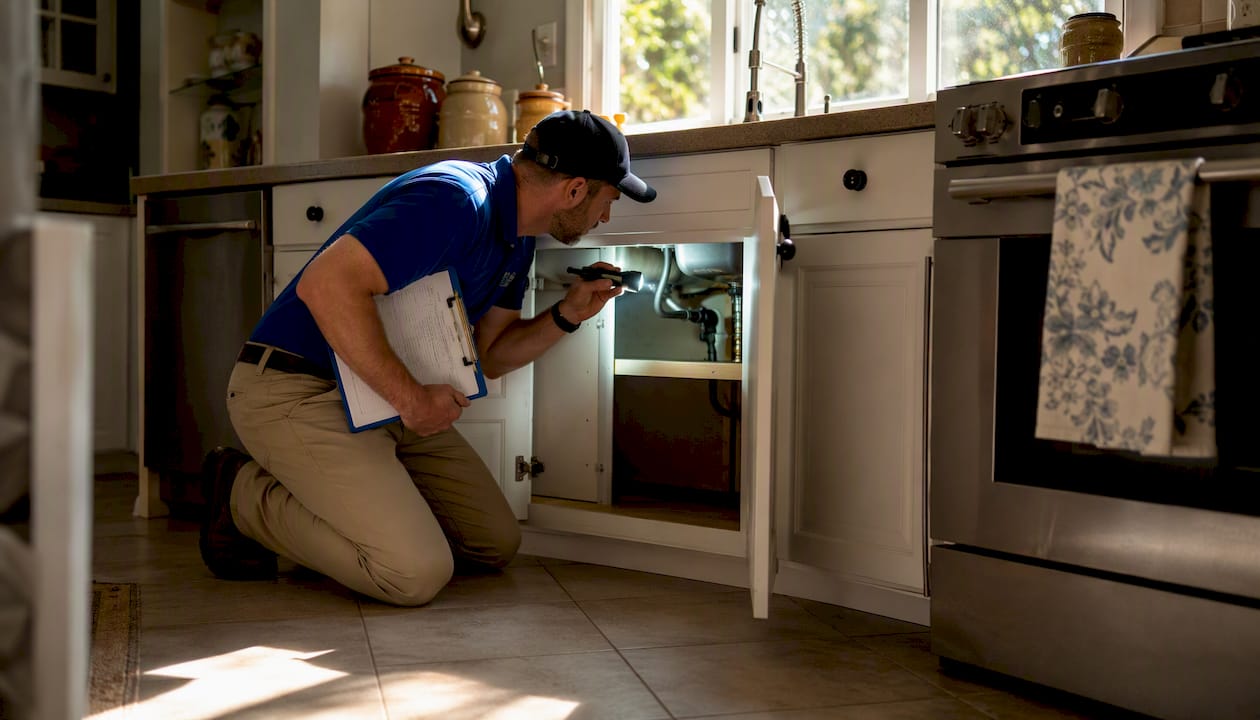
Days 1–3: Schedule the general home inspection immediately. In a sight-unseen purchase, the inspection is your first real look at the property. Do not wait.
Days 3–10: Order specialist inspections for any systems flagged by the general inspector — foundation, roof, HVAC, plumbing, or pest. If you are financing, notify your lender so they can order the appraisal. Title review typically runs concurrently.
Days 10–21: Review all inspection reports. You now have three standard options: accept the property as-is, submit a repair request or credit request to the seller, or terminate the contract within the contingency window and recover your earnest money.
Common negotiation outcomes after inspection:
- Seller agrees to repair specific items before closing.
- Seller offers a price reduction or closing cost credit in lieu of repairs.
- Buyer and seller agree on a combination of credits and repairs.
- Buyer terminates within the contingency window with earnest money returned.
Remote final walkthrough: Before closing, arrange a video walkthrough with your local agent to verify that agreed repairs were completed and that the property’s condition matches what was disclosed. Confirm that all seller-owned personal property has been removed and that no new damage has occurred since the inspection.
If the inspection reveals major structural defects — foundation failure, severe water intrusion, or a roof requiring immediate replacement — you have a decision to make within your contingency window. Most buyers in this situation either renegotiate aggressively or exit. Sellers who refuse any concession on a property with major defects are a signal worth heeding.
Key Takeaways
A blind offer without an inspection contingency is not a strategy — it is a liability. Every other protection in this guide depends on that contingency being in the contract.
| Point | Details |
|---|---|
| Always include an inspection contingency | This is the non-negotiable protection for any sight-unseen purchase, regardless of market pressure. |
| Use a local partner as your eyes | An agent, inspector, or contractor on the ground conducting a live video walkthrough reduces blind-offer risk substantially. |
| Budget a repair reserve | Investors should hold back 10% of purchase price; owner-occupants should budget for at least two specialist inspections. |
| Inspection windows: 2–4 weeks | Sight-unseen offers warrant the longer end of this range; due diligence periods of two to four weeks are standard practice. |
| Sendmls for offer documentation | Sendmls auto-populates state-approved contracts, sends via Gmail, and tracks opens — keeping blind-offer submissions documented and organized. |
The part most guides get wrong about buying sight unseen
Most articles on blind offers treat the sight-unseen part as the main risk. It is not. The main risk is submitting a poorly structured offer — one that either lacks contingencies or uses informal paperwork that listing agents do not take seriously.
A buyer who submits a clean, state-approved contract with a 14-day inspection contingency and a 2% earnest money deposit is in a far stronger position than one who sends a letter of intent via text message. The format and completeness of the offer signal whether you are a credible buyer. Listing agents make that judgment in seconds, and whether they present your offer at all can hinge on how professional it looks.
The second thing most guides understate: the Sight Unseen Addendum is not a formality. It is a legal document that can limit your remedies. Read it before you sign it. Some versions restrict your right to terminate for anything short of a material defect. If the addendum the seller presents is overly restrictive, negotiate the language before you sign, not after.
Finally, the inspection period is not just a safety valve — it is your only real look at the property. Treat it like a second due-diligence sprint. Order every specialist inspection you can justify. The cost of a $300 foundation inspection is trivial against the cost of a $40,000 foundation repair you did not see coming.
Sendmls makes blind-offer submissions faster and harder to ignore
Submitting a sight-unseen offer with informal paperwork is one of the fastest ways to get ignored. Listing agents receive dozens of inquiries; a text message or a generic email with a PDF attachment rarely gets the same attention as a properly formatted, state-approved contract delivered through a recognizable channel.
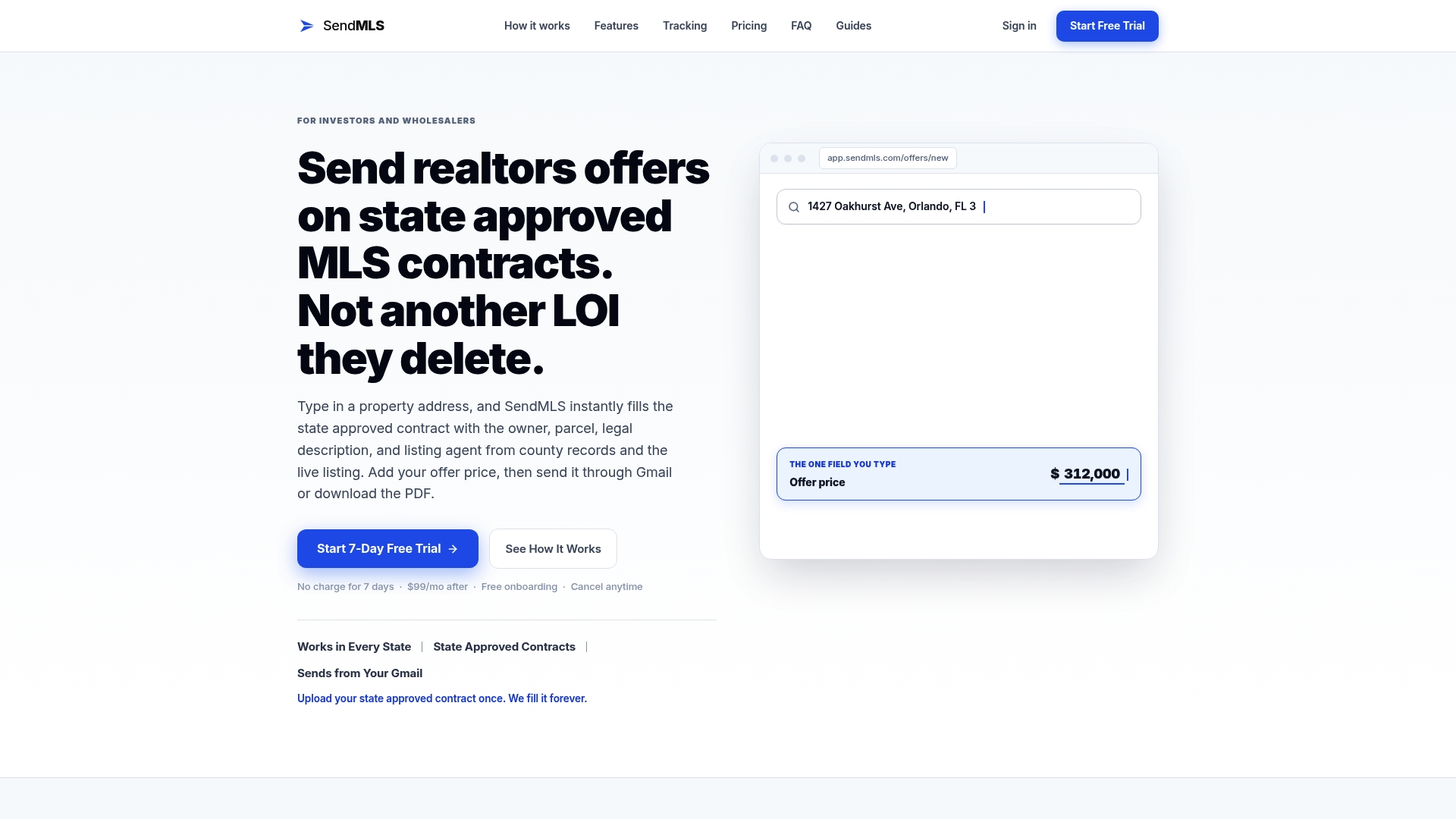
Sendmls was built for exactly this workflow. It auto-populates state-approved real estate contracts from MLS and county data, sends offers directly from your Gmail account, and tracks when the listing agent opens your submission. For investors running multiple sight-unseen offers at once, the pipeline view keeps every active offer organized with status updates and follow-up reminders. You know which offers have been seen, which need a nudge, and which are moving toward acceptance.
The 7-day free trial requires no long-term commitment. If you are submitting blind offers regularly and want documentation, delivery confirmation, and professional-grade contracts without hiring a full team, start your free trial at Sendmls and see how much faster the process moves.
Useful sources
These are the primary references cited throughout this guide. Each one adds specific value to a different part of the blind-offer process.
- Realtor.com — What Is a Blind Offer? The clearest industry-facing explanation of why sight-unseen buying is a reordering of steps, not a skipping of due diligence. Backs the inspection contingency recommendation.
- Rocket Mortgage — Buying a House Sight Unseen Practical guidance on local partner roles and live video walkthrough techniques. Useful for the pre-offer checklist.
- Pacaso — Buying a House Sight Unseen Source for the two-to-four-week due diligence window norm cited in the timelines section.
- Redfin — Buying a House Sight Unseen Context on virtual tour adoption and buyer willingness to purchase remotely.
- CEASAP Real Estate Glossary — Blind Offer Covers investor use cases, post-inspection fallout risk, and the reputational consequences of failed contracts.
- SoFi — 6 Tips for Buying a House Sight Unseen Explains the pre-offer inspection tradeoff and the risk of waiving contingencies entirely.
- IAR Sight Unseen Acknowledgment Form A real-world example of a Sight Unseen Addendum and its legal effect on buyer termination rights.