Stop Recorder Rejections: Arizona Residential Purchase Contract Steps
Get the Arizona residential purchase contract, learn affidavit of legal value and recording steps, and speed offers with autofill tracking.
Stop Recorder Rejections: Arizona Residential Purchase Contract Steps

Get the Arizona Residential Resale Real Estate Purchase Contract from the Arizona Association of REALTORS® or the Arizona Department of Real Estate. Once signed by both parties, it becomes a binding agreement that sets the terms for financing, inspections, disclosures, and closing. Before you sign anything, review the required disclosures, confirm the form’s version, and understand the execution steps that follow acceptance.
TL;DR:
- Confirm the purchase contract version matches the latest Arizona Association of REALTORS® form, including all applicable addenda and disclosures before signing.
- Ensure the affidavit of legal value is complete and notarized, as missing affidavits are a common cause of recording delays in Arizona.
- Request all required HOA and property disclosures early, especially association documents and any additional property-specific disclosures such as lead-based paint or insurance claims.
- Clarify that the escrow and title company correctly handle all steps, from collecting deposits to ordering title and confirming affidavits before closing.
- Use automated contract tools for high-volume offers to ensure form accuracy, track agent engagement, and reduce administrative errors.
Table of Contents
- Where to get the official Arizona form and current templates
- Arizona statutes and recording rules that affect the purchase contract
- Required seller disclosures buyers should expect in Arizona
- Key contract terms and common contingencies in the Arizona purchase agreement
- Execution steps: escrow, close of escrow, recording, and timelines
- Practical negotiation checklist and pitfalls (includes SendMLS workflow notes)
- What actually separates a clean closing from a messy one
- SendMLS: autofill Arizona purchase contracts and track opens
- Sources
- FAQ
Where to get the official Arizona form and current templates
The Arizona Association of REALTORS® publishes the Residential Resale Real Estate Purchase Contract that most licensed agents use across the state, and it gets updated periodically to reflect new statutes or industry practices. The Arizona Department of Real Estate also hosts licensing and consumer resources that reference the standard contract framework. Third-party form hosts sometimes carry copies, but treat those as secondary and always compare the revision date against what your agent or broker provides.
Before you rely on any downloaded copy, run through a short checklist:
- Confirm the form’s revision date printed in the footer matches the current AAR version.
- Check that all applicable addenda are attached, since a base contract without the right addenda leaves gaps.
- Get the Seller’s Property Disclosure Statement and any HOA documents separately, since they are not part of the base contract PDF.
- Avoid contracts pulled from generic template sites that do not identify a publication date.
An outdated form can reference repealed statutes or omit clauses that current practice expects, which creates confusion during negotiation.
Arizona statutes and recording rules that affect the purchase contract
A handful of Arizona statutes shape how a purchase contract gets prepared, signed, and recorded, and skipping them causes real delays at the county recorder’s office.
- An affidavit of legal value must accompany the deed and contract documents at recording, under requirements tied to SB1479 and related recording statutes, and county recorders may refuse to record instruments that lack a complete affidavit unless a statutory exemption applies.
- Notarization follows standard county recorder practices for acknowledging signatures, so confirm your escrow or title company handles this correctly before the closing date.
- For land sales involving five or fewer unsubdivided parcels in unincorporated areas, A.R.S. § 33-422 requires the seller to furnish a written affidavit of disclosure at least seven days before transfer, and gives the buyer a five-day window to rescind after receiving it.
Missing or incomplete affidavits are a common administrative reason recording gets delayed in Arizona, so confirming these requirements before closing day avoids a last-minute scramble at the recorder’s office.
Required seller disclosures buyers should expect in Arizona
Arizona sellers owe buyers several disclosures that typically travel alongside the purchase contract, and timing matters as much as content.
- The Seller’s Property Disclosure Statement is usually delivered early in the transaction, giving the buyer a defined window to review it and raise objections before the inspection period closes.
- For condominium and planned community sales, A.R.S. § 33-1260 requires the seller to provide association documents including bylaws and the recorded declaration, and the purchaser must sign a written acknowledgment confirming receipt.
- Associations may charge a fee for producing resale documents, and the statute permits an additional rush fee when the buyer needs faster turnaround.
- Depending on the property, additional disclosures may cover lead-based paint in homes built before 1978, prior insurance claims history, and ongoing association assessments.
Request HOA resale documents as early as possible, since association response times and fee structures under the statute can affect your closing timeline.
Key contract terms and common contingencies in the Arizona purchase agreement
The AAR contract template organizes a transaction around a handful of core sections that both parties negotiate before signing.
- Earnest money functions as a good-faith deposit held in escrow, and the contract should specify the deposit amount, the escrow company holding it, and the conditions under which it becomes non-refundable.
- The inspection period gives the buyer a set number of days to evaluate the property’s condition, and waiving it or accepting a short window increases the buyer’s risk of inheriting undisclosed problems.
- Loan and appraisal contingencies set deadlines for the buyer to secure financing and for the property to appraise at or above the purchase price, protecting the buyer’s earnest money if either falls through.
- Title and escrow instructions determine who orders the title commitment, how closing costs get allocated between buyer and seller, and what happens if a title defect surfaces before closing.
Vague language in any of these sections tends to surface as a dispute later, so precise wording upfront saves time. For a deeper look at how buyers and sellers modify these terms, see this guide to purchase agreement addenda.
Execution steps: escrow, close of escrow, recording, and timelines
Once both parties sign, the contract triggers a sequence of steps that ends with recording the deed.
- Close of Escrow is the point at which the deed records with the county recorder, and recording is what finalizes the transfer of ownership.
- The escrow company collects deposits, orders the title commitment, and holds funds until every condition in the contract is satisfied.
- Recording requires a complete affidavit of legal value, and counties can refuse to record instruments missing that documentation, which delays the entire closing.
- Missed deadlines, whether for inspection objections, loan approval, or the closing date itself, usually trigger cure provisions in the contract that give the other party a chance to respond before declaring a default.
Understanding the difference between an escrow company and a title company helps here too. This breakdown of escrow versus title company roles explains when each one takes the lead, and a closing process checklist walks through the steps in order. Whether agents are obligated to present every offer that comes in also affects how quickly acceptance happens; see this explainer on offer presentation duties.
Practical negotiation checklist and pitfalls (includes SendMLS workflow notes)
Certain clauses deserve more attention than others when you are negotiating an Arizona purchase contract.
- Prioritize the inspection period length, the conditions for releasing earnest money, and the financing contingency timeline, since these three drive most disputes.
- Watch for red flags like a missing affidavit of legal value, ambiguous close of escrow language, or escrow instructions that do not name who orders title.
- Confirm the SPDS delivery date is actually filled in, since a blank date field creates confusion about when the buyer’s review period started.
Pro Tip: If you are submitting a high volume of offers, use a state-approved contract that autofills property and owner details, then track when the listing agent opens it so you know exactly when to follow up instead of guessing.
Consult an Arizona real estate attorney when a contract involves unusual seller circumstances, a contested title issue, or terms that fall outside the standard AAR template. Investors running high offer volume should also review compliance considerations for MLS wholesaling before scaling up.

What actually separates a clean closing from a messy one
The contracts that cause the fewest problems are the ones where both sides confirmed the form’s revision date and verified every required affidavit before signing, not after. Most disputes I have seen trace back to a skipped disclosure deadline or an escrow instruction nobody bothered to spell out. If you build a habit of checking the form date and confirming the affidavit of legal value early, most of the risk in an Arizona purchase contract disappears before it becomes a problem.
— Shane
SendMLS: autofill Arizona purchase contracts and track opens
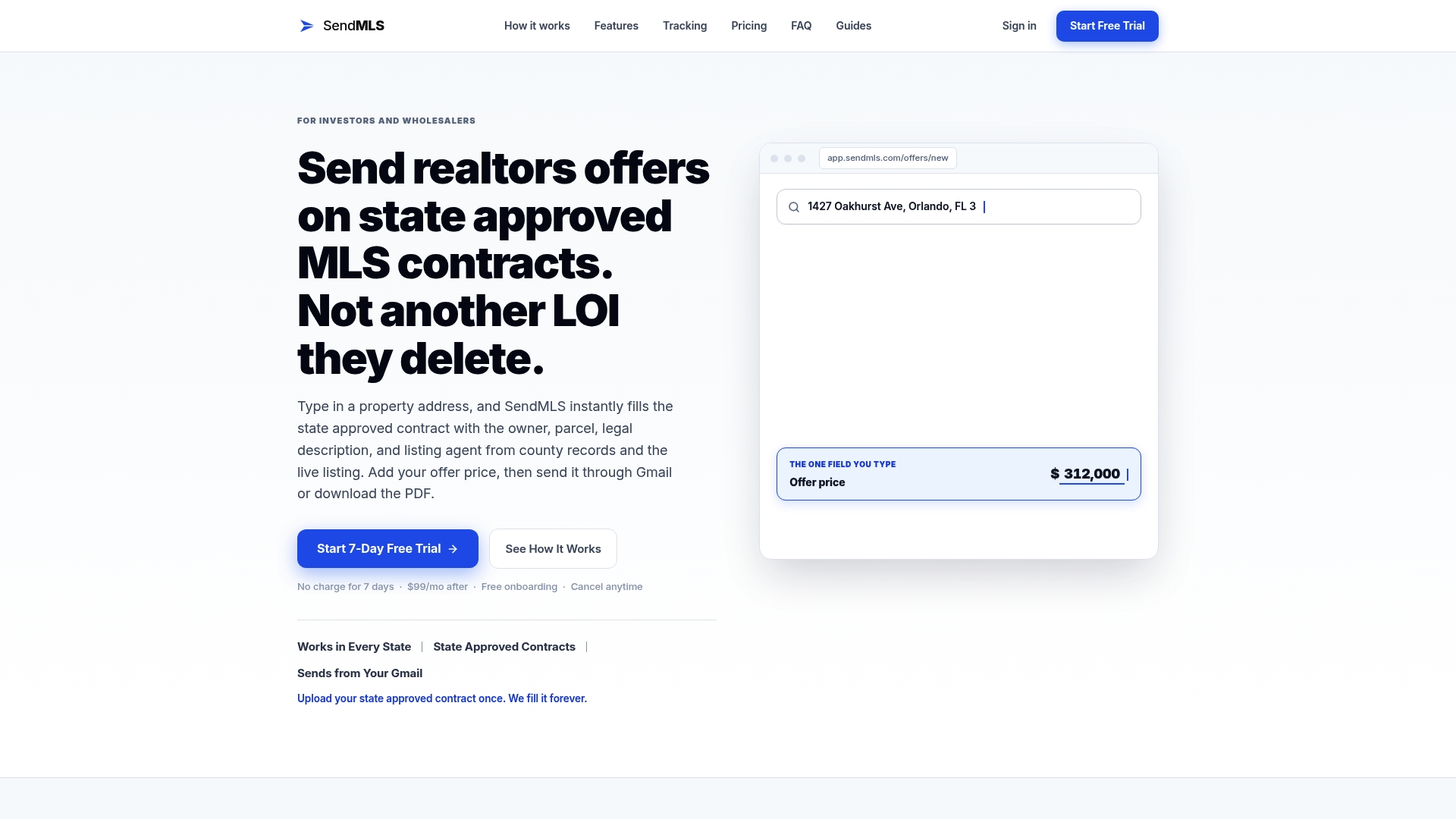
If you are making offers on more than a handful of Arizona listings a month, retyping the same contract fields for every property gets old fast. SendMLS autofills the state-approved contract with owner, parcel, and agent details pulled from public records, sends it straight from your Gmail so it lands as real paperwork from a real person, and tells you the moment the listing agent opens it.
- Designed for wholesalers and investors who regularly make multiple offers on aged MLS listings.
- Suitable for land investors submitting numerous offers across county listings, and for acquisition teams that track offer activity across multiple users.
- Offers a trial period to explore the software without setup required.
Start your trial and see how fast a state-approved offer can go out at Sendmls.
This article is general information, not a substitute for advice from a qualified lawyer. Consult a qualified legal professional about your own circumstances before acting on anything here.
Sources
- SB1479 (Arizona legislature) — affidavit of legal value and recording requirements
- Arizona Association of REALTORS® — Buyer advisory and AAR sample contract excerpts (2026)
FAQ
What are the requirements for a real estate purchase agreement in Arizona?
An Arizona purchase agreement needs a clear property description, purchase price, earnest money terms, and signatures from both parties to become binding. Depending on the property type, it must also account for statutory disclosures like the condominium association documents required under A.R.S. § 33-1260 or the land sale affidavit required under A.R.S. § 33-422.
Does Arizona have real estate reciprocity?
Arizona does not offer blanket license reciprocity for real estate agents from other states, though limited recognition paths exist for out-of-state licensees who meet specific criteria. Anyone relocating a real estate license to Arizona should check current licensing requirements directly with the state regulator before assuming their existing license transfers.
What are the requirements for buying a house in Arizona?
Buying a house in Arizona typically starts with a signed purchase contract, usually the AAR Residential Resale Real Estate Purchase Contract, followed by an earnest money deposit, an inspection period, and satisfaction of any financing or appraisal contingencies. The transaction closes when the deed records at the county recorder, which requires a complete affidavit of legal value attached to the recording documents.